
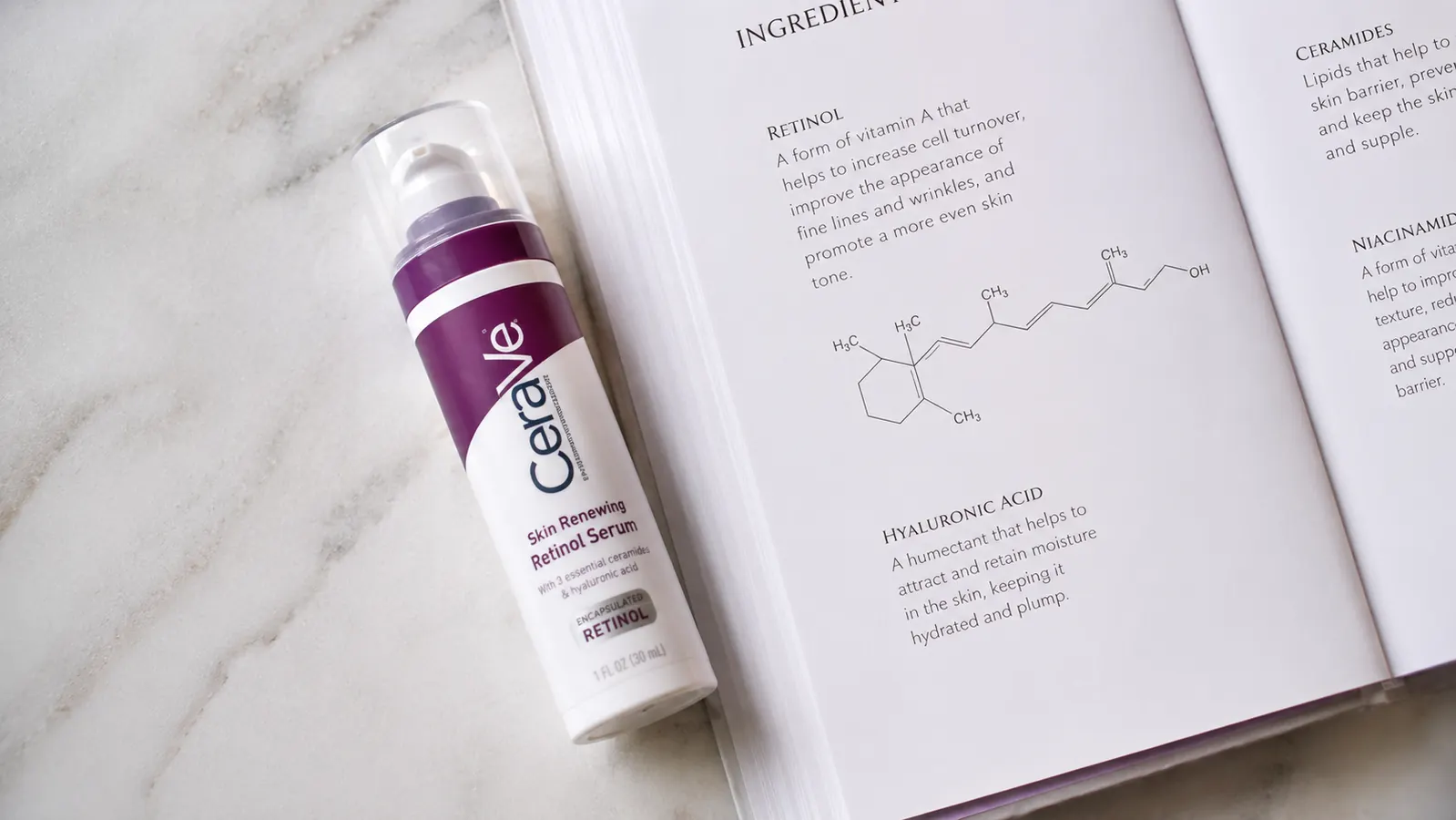
Here is something the skincare industry knows but rarely says out loud: the word 'encapsulated' on a retinol label means almost nothing on its own. It describes a delivery method, not a concentration, not a verified efficacy level, and not a standardized process. Two products can both call their retinol encapsulated and share almost nothing in terms of how the active actually behaves in your skin. That bothered me when I first picked up CeraVe's Anti Aging Retinol Serum, so before I applied a single drop, I spent about two hours with the ingredient list, a few published studies on microencapsulation technology, and a patent database search. What I found is more nuanced than the label suggests, and it explains a lot about who this product works for and who it quietly lets down.
This is not a timeline review of how my skin changed over months of use. It is an ingredient-level examination of what CeraVe actually put in this bottle, what the encapsulation claim means chemically, where the formula overdelivers relative to its price, and where the gaps are. If you want to understand the product before you buy it, rather than trust 27,850 Amazon reviews that mostly judge it against their previous experiences, keep reading.
The Quick Verdict
The formula is more sophisticated than the price implies, but the undisclosed concentration and the overloaded marketing around 'encapsulation' mean most buyers do not fully understand what they are getting, or when to expect it to stop being enough.
Amazon Check Today's Price →If you are tired of retinols that burn before they work, this formula is worth understanding.
CeraVe pairs encapsulated retinol with niacinamide, three ceramides, hyaluronic acid, and a peptide complex. At this price, no other formula this complete exists for sensitive skin.
Amazon Check Today's Price on Amazon →What 'Encapsulated Retinol' Actually Means Chemically
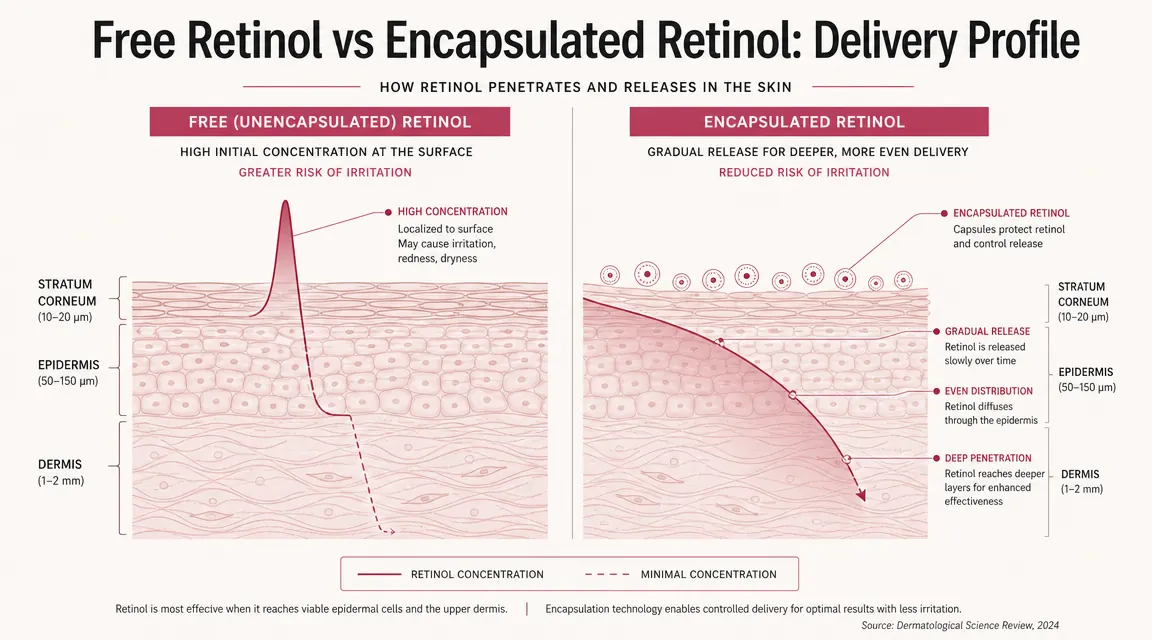
Retinol in its free form is unstable. It oxidizes when exposed to light and air, which is why properly formulated retinol products come in opaque or dark packaging with sealed pumps rather than open jars. When it hits the skin surface in large amounts all at once, it can trigger keratinocyte stress, which is why you get the initial redness, peeling, and sensitization that characterizes a harsh retinol introduction. Microencapsulation addresses both problems by wrapping the retinol in a polymer shell, typically a lipid matrix or a silicone-based microsphere, depending on the manufacturer.
The shell serves two functions. First, it protects the retinol from oxidative degradation during the product's shelf life, which means the active arriving at your skin is more potent than an equivalent percentage of free retinol sitting in an unstabilized formula. Second, the shell ruptures or slowly dissolves as it penetrates the stratum corneum, releasing the retinol gradually into the deeper layers where it needs to work rather than flooding the surface all at once. The published literature on encapsulated retinol does show reduced transepidermal water loss and measurably lower erythema scores compared to the same concentration delivered in free form, so the basic claim has real support.
What encapsulation does not do is make retinol infinitely gentle regardless of concentration. A high-dose encapsulated retinol will still produce irritation. And here is the part CeraVe leaves out of the marketing: the company does not disclose the retinol concentration in this formula. Retinol appears in the ingredient list well below the level where concentrations are typically disclosed, which most formulation chemists interpret as below 0.3%. That is a beginner dose. It is appropriate for the target user. But calling the delivery system 'encapsulated' and letting consumers imagine they are getting a sophisticated high-potency formula without the downsides is a selective truth at best.
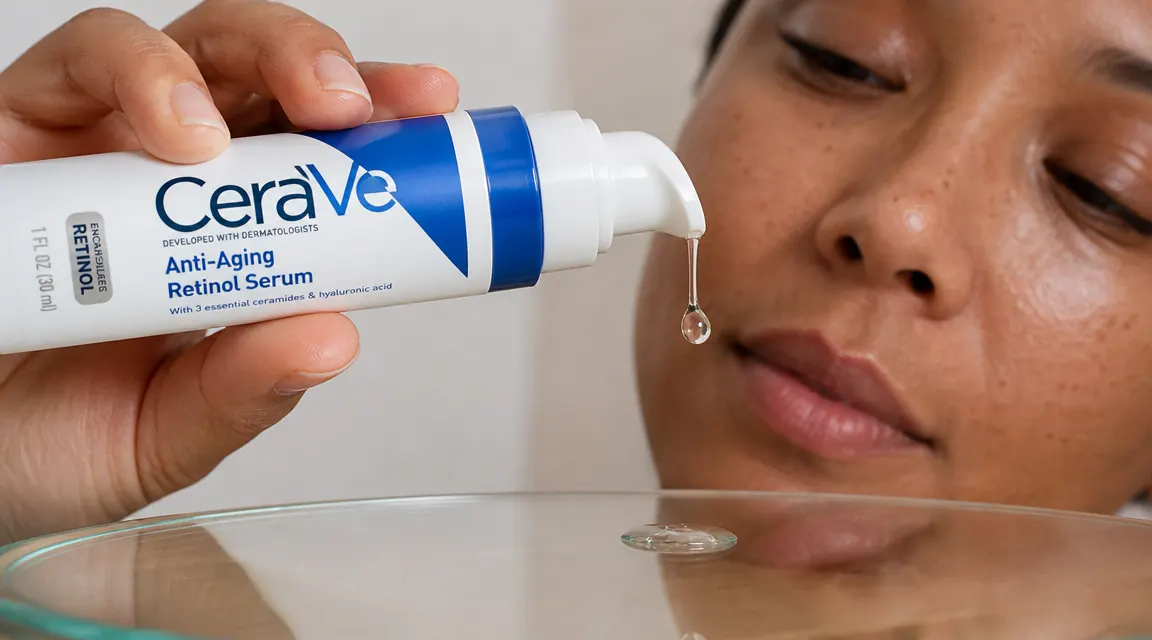
The Rest of the Ingredient List Is Where This Formula Actually Shines
Strip away the encapsulation marketing and what you have is a barrier-supportive serum with a meaningful retinol dose underneath. The ingredient list includes niacinamide at a concentration that, based on list position, is likely between 2% and 4%. Niacinamide at those levels is clinically validated for sebum regulation, post-inflammatory hyperpigmentation reduction, and barrier reinforcement. Layering it with retinol is smart formulation because retinol drives cell turnover while niacinamide limits the surface disruption that turnover can cause.
The ceramide trio present here, ceramide NP, ceramide AP, and ceramide EOP, is the same combination CeraVe uses across its moisturizer line, and it is worth taking seriously. These are not cosmetic labeling claims. Ceramides are sphingolipids that make up roughly 50% of the lipid content in the stratum corneum. When you introduce a retinol, even a gentle one, you temporarily increase skin cell turnover and risk thinning the lipid matrix that keeps moisture in and irritants out. Putting the ceramides directly in the retinol formula rather than expecting the user to layer a separate moisturizer after is a formulation decision that genuinely reduces the risk of barrier compromise.
The peptide complex listed on the label is where I have the most questions. CeraVe names a peptide complex but does not specify which peptides. The category is broad. Matrixyl (palmitoyl pentapeptide-4) is clinically studied for collagen stimulation. Argireline (acetyl hexapeptide-3) is a neurotransmitter blocker with modest evidence for expression line softening. Generic 'hydrolyzed collagen' functions as a skin-conditioning humectant, not a structural collagen rebuilder. Without knowing which peptides are present and at what concentrations, the 'peptide complex' is a marketing gesture rather than a verifiable functional ingredient. It may contribute something useful. It may be present at trace concentrations that do nothing measurable.
The ceramides and niacinamide do the heavy lifting here. The encapsulated retinol is real science. The peptide complex is a question mark. Understanding which parts of this formula to trust changes how you use it and what you expect from it.
Where This Sits on the Retinol Potency Spectrum
The retinoid spectrum runs from weakest to strongest roughly as follows: retinyl esters (retinyl palmitate, retinyl acetate), retinol, retinaldehyde (retinal), and prescription retinoids (tretinoin, adapalene). CeraVe uses retinol, which sits in the middle of this spectrum. It must be converted to retinoic acid by skin enzymes before it becomes biologically active, which means it is inherently slower-acting than retinaldehyde (one conversion step fewer) and much slower than tretinoin (which is retinoic acid directly). The trade-off is that more conversion steps mean more gradual activity and less acute irritation.
At a likely sub-0.3% concentration delivered via encapsulation, this formula sits at the gentlest end of the retinol category. That is exactly right for first-time retinol users, for skin types that have had bad reactions to actives before, and for people who cannot tolerate downtime. It is not enough for someone who has already used 0.5% or 1% retinol successfully for more than a year. The rule of thumb in formulation science is that you get the most visible change from retinol during the first 12 to 24 weeks, and then gains diminish unless you either increase the concentration or add a complementary mechanism of action.
What this means practically: if you have acclimated to retinol and are looking for a product to maintain results rather than drive new ones, this formula is suitable for the job. If you have specific concerns about forehead lines or textural irregularities and want to push them harder, CeraVe's serum is a starting point, not an endpoint. The comparison between this formula and stronger alternatives is something I break down in detail in my CeraVe vs The Ordinary retinol comparison.
What the 27,850 Amazon Reviews Are Actually Measuring
A 4.6-star rating from 27,850 reviewers is meaningful, but it is measuring something more specific than product quality in the abstract. Amazon reviewers are predominantly comparing this serum to their previous retinol experience, which for most of the five-star contingent was a harsh formula that caused significant irritation. When you come from a product that peeled your skin for three weeks, 'this retinol did not destroy my face' reads as an outstanding result. That is not cynicism, it is an accurate read of the review sentiment. Scanning through the negative and neutral reviews, the most common complaints are that results came very slowly, that the formula produced no visible change at all for some users (likely those who had already built retinol tolerance), and that the pump was unreliable.
The five-star reviews skew heavily toward first-time retinol users, sensitive skin types, and people 35 to 55 who tried prescription retinoids or higher-concentration serums and needed something they could actually stick with. The reviews are an accurate picture of that subset of users' experiences. They are not a reliable guide for someone who wants to push into more aggressive anti-aging territory.
The Fragrance-Free Claim and What It Means for Reactive Skin
CeraVe marks this product as fragrance-free, and scanning the ingredient list confirms no fragrance, no parfum, no essential oils, and no masking fragrance ingredients. This is not trivially common in the retinol serum category. A surprising number of retinol products add lavender oil, bergamot, or citrus extracts, all of which are sensitizers that directly contradict the purpose of using a gentle delivery system. The decision to keep this formula completely free of fragrance ingredients is the right call for reactive or sensitized skin, and it is one of the clearest reasons to choose this over many comparable products at a higher price.
The full ingredient list also has no alcohol denat, no witch hazel, no sulfates, and no known comedogenic oils in the top half. For breakout-prone skin types, those absences matter as much as the presences. A retinol serum that also contains a comedogenic wax or a pore-clogging ester in the emollient matrix can trigger breakouts that look like retinol purge but are actually contact comedones from the base formula.

What Nobody in the Reviews Mentions: The Stability Problem
Here is the thing about retinol that most reviews skip entirely. Even encapsulated retinol degrades over time once the bottle is opened and air contacts the formula. The oxidative clock starts ticking the moment the seal breaks. CeraVe uses an airless pump, which slows this degradation significantly compared to a dropper bottle or open jar, but it does not halt it. A bottle you have been using for four months is delivering less active retinol than the same bottle fresh out of the box. The practical implication is that if you are using this serum every other night or less, you might be working through a bottle over five or six months, during which the retinol potency has meaningfully declined.
The fix is to use the product at a pace that finishes the bottle within three to four months of opening, store it away from direct light and heat, and replace it promptly rather than keeping a half-empty bottle in a warm bathroom for an extended period. None of that is complicated, but none of it appears in the product instructions either. Understanding why retinol stability matters helps you get more value from what you already paid for.
What I Liked
- Encapsulation technology is genuinely supported by published research on reduced irritation
- Ceramide NP, AP, and EOP triple combination directly counteracts the barrier thinning that retinol can cause
- Niacinamide at functional concentration addresses sebum regulation and post-inflammatory redness simultaneously
- Completely fragrance-free, alcohol-free, and free of known comedogenic emollients
- Airless pump packaging extends active retinol shelf life better than dropper bottles
- Price per ml makes this the most cost-effective barrier-supportive retinol serum available
Where It Falls Short
- Retinol concentration is not disclosed, almost certainly below 0.3%, and will plateau for experienced users
- Peptide complex is not specified, making the anti-aging peptide claim unverifiable
- Marketing emphasis on encapsulation obscures the modest concentration beneath it
- Not appropriate for users who have already built tolerance to mid-strength retinol formulas
- Pump occasionally delivers inconsistent doses, which complicates tracking actual usage
Who This Is For
This serum is well matched for you if you have combo, sensitive, or dehydrated skin and have either never used retinol before or have had bad reactions to stronger formulas. The ceramide and niacinamide base makes it a safer introduction than most alternatives at any price. It is also a strong choice if your primary goals are subtle texture refinement, prevention of early fine lines, and maintenance of the gains you have already built with retinol rather than aggressive reversal of deep wrinkles. If you are still building your retinol tolerance and want to understand the ramp-up process before you commit to anything, my guide on starting retinol without irritation covers the slow-ramp protocol in detail.
Who Should Skip It
Skip this if you are already using a 0.5% or higher retinol consistently without problems and want to continue making visible progress. Skip it if you are primarily concerned with deep wrinkles or significant sun damage that requires a prescription-strength retinoid or a higher active concentration. Skip it if the unspecified peptide blend matters to you and you prefer to know exactly what you are paying for. And skip it entirely if you are pregnant or nursing, since retinoids of any form are contraindicated during pregnancy regardless of concentration or delivery method. For that population, azelaic acid is the only well-studied anti-aging and brightening active considered safe during pregnancy, and it is worth researching as an alternative.
The formula is more thoughtful than the price suggests. The marketing is less honest than the science behind it.
CeraVe Anti Aging Retinol Serum is fragrance-free, ceramide-loaded, and built with a delivery system that genuinely reduces irritation. For sensitive or first-time retinol skin, it is the most complete formula at this price point.
Amazon Check Today's Price on Amazon →