
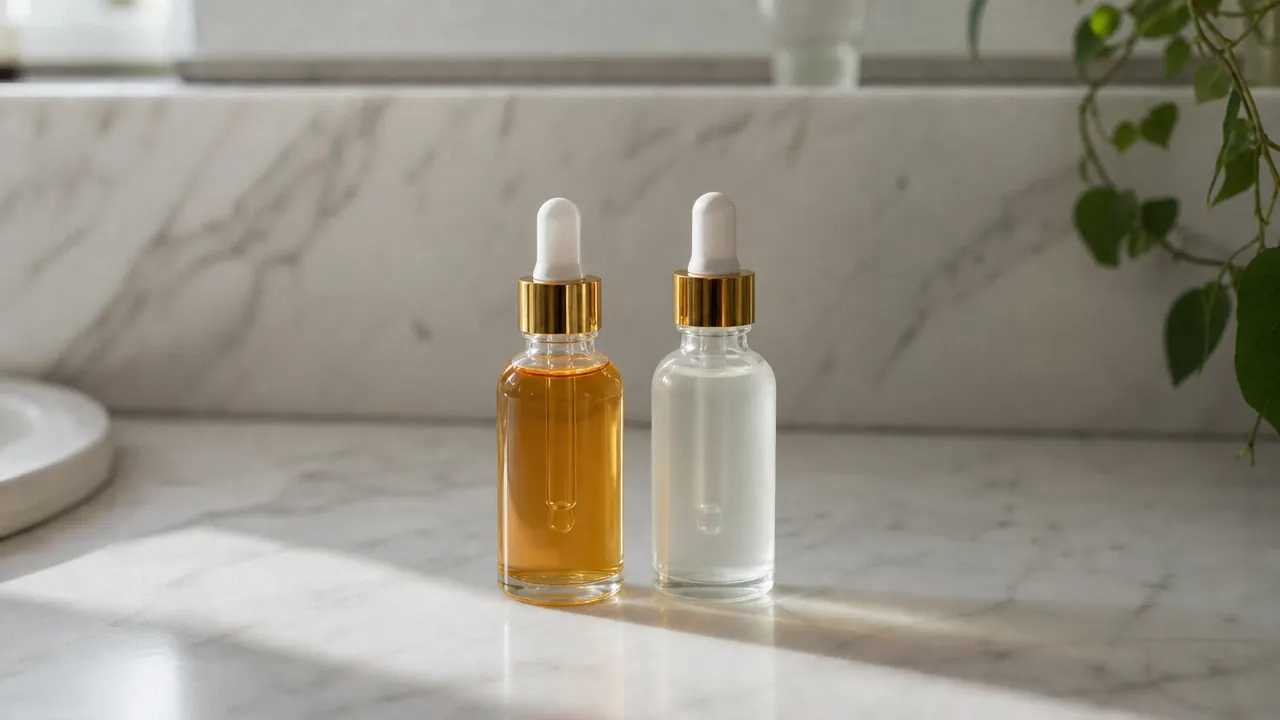
If you have been avoiding retinol because every version you tried left your face peeling and angry, you are not being dramatic. Retinol is genuinely one of the most evidence-backed ingredients in skincare, but how it is delivered to your skin matters enormously. Two formulas come up constantly in this conversation: the CeraVe Anti Aging Retinol Serum, which uses an encapsulated delivery system and wraps the retinol in a ceramide-heavy base, and The Ordinary Retinol 0.5% in Squalane, which gives you a straightforward high-concentration drop in a simple, lightweight oil base. The price gap between them is real. So is the difference in how they behave on skin.
Short answer: for most people with combo, sensitive, or breakout-prone skin, the CeraVe is worth the price difference. The encapsulated delivery genuinely reduces the irritation onset compared to a straight retinol formula at equivalent effective concentration. The Ordinary version is a competent product for experienced retinol users who have already built tolerance and want a more potent formula at a lower cost. I used both on my own combo skin, alternating them over several months, and the experience confirmed what the formulation chemistry suggests.
| label | left | right | winner |
| label | left | right | winner |
| label | left | right | winner |
| label | left | right | winner |
| label | left | right | winner |
| label | left | right | winner |
| label | left | right | winner |
| label | left | right | winner |
Where CeraVe Wins
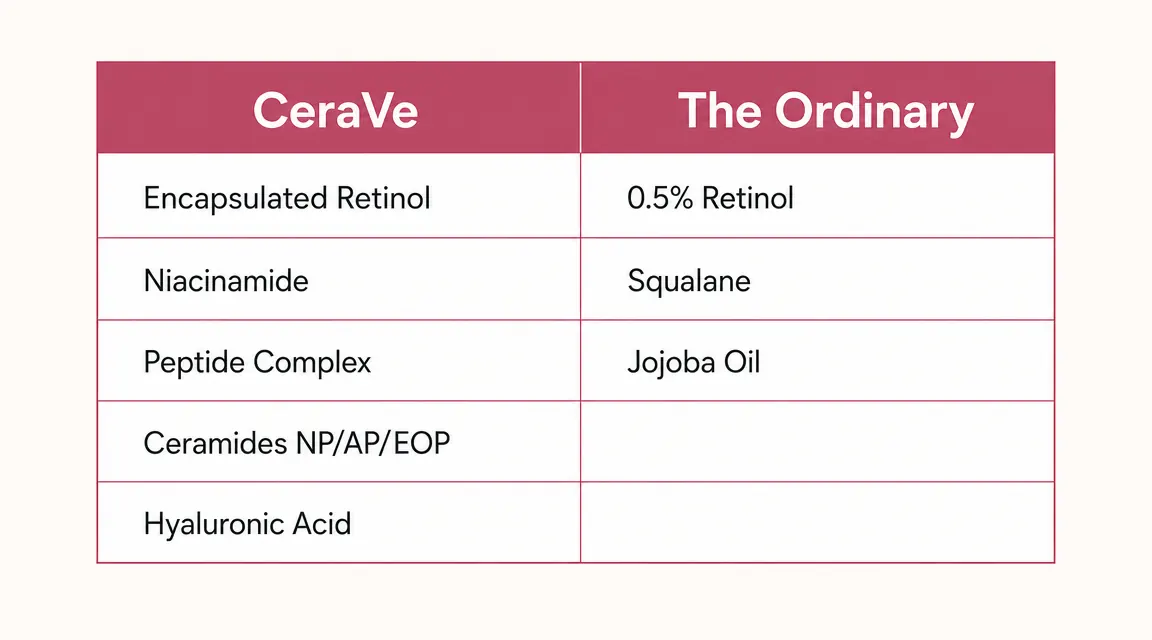
The encapsulation story is not just marketing. Traditional retinol hits the skin surface all at once. Encapsulated retinol is coated in a lipid shell that breaks down gradually, releasing the active ingredient over several hours. The result is a lower peak concentration at any given moment, which is exactly what reduces the redness, flaking, and irritation that makes so many people quit retinol before it has a chance to work. My skin, which burns at the first sign of a strong active, handled the CeraVe formula without incident from the first week. That alone made it the easier serum to stay consistent with, and consistency is almost everything with retinol.
The supporting formula is the other significant advantage. CeraVe is built around ceramides, three of them (NP, AP, and EOP) in a ratio designed to mimic the skin's natural lipid matrix. That matters because retinol, even in a gentle delivery format, can compromise barrier function over time, especially if you layer it with other actives or live in a dry climate. Having the ceramides built directly into the serum means you are simultaneously doing some barrier repair every time you apply it. The added niacinamide calms inflammation and supports sebum regulation, and the peptide complex adds a collagen-stimulation mechanism on top of the retinol turnover work. It is a genuinely well-thought-out formula for people whose skin needs the retinol but cannot tolerate the disruption.
Your skin wants retinol. It does not want the three-week peel that usually comes with it.
CeraVe's encapsulated formula is the reason I finally stuck with retinol long enough to see real results. Fragrance-free, ceramide-loaded, and priced where most people can actually afford to be consistent.
Amazon Check Today's Price on Amazon →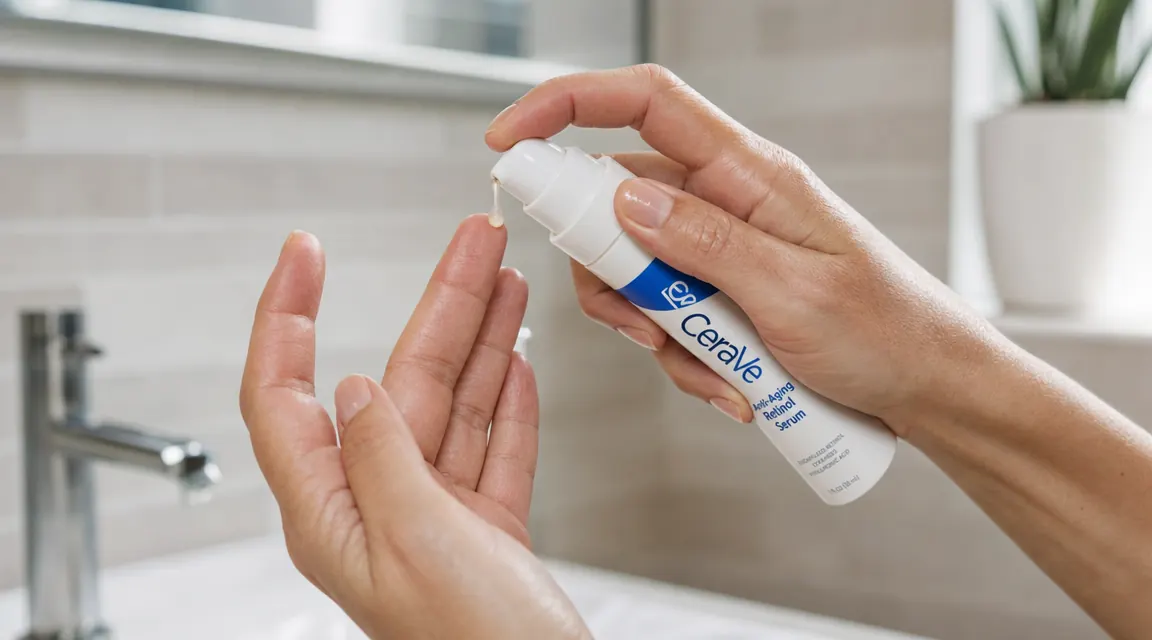
Where The Ordinary Wins
The Ordinary Retinol 0.5% in Squalane is an honest product at an honest price. If you are someone who has been using retinol for two or more years and your skin has developed real tolerance, the higher concentration in a simple squalane base can be genuinely effective. Squalane is one of the most skin-compatible emollients available, it is structurally similar to the sebum your skin already produces, so it applies smoothly and does not feel occlusive on combination or oilier skin types. The stripped-back formula also means fewer ingredients, which matters if you are managing a complex routine with multiple actives and want to minimize overlap.
The price point also changes the math on usage frequency. If cost is a real constraint and you know your skin handles retinol well, putting a full-sized The Ordinary bottle through your routine three to four nights a week costs a fraction of what you would spend on an equivalent volume of CeraVe. That lower price also makes it easier to experiment with application methods, buffering it with a moisturizer, mixing a small amount into your SPF-free night cream, trying it under a barrier-supportive moisturizer rather than as a standalone treatment. Experienced users appreciate that flexibility.
The Irritation Gap in Practice
The encapsulation is doing real work. My skin handled CeraVe from week one. The Ordinary at 0.5% had me flaking by day four.
When I reintroduced The Ordinary's retinol after several months on CeraVe, the difference was immediate. By day four, my under-eye area had a faint papery texture and the sides of my nose were flaking slightly, not a disaster, but a clear signal that my skin was reacting to the unmodified delivery. The same reaction did not appear in the same timeframe when I had started the CeraVe. Part of this is the encapsulation. Part of it may also be the ceramide buffering in the CeraVe base acting as a built-in protective layer. Either way, for someone with my skin type, the difference was measurable.
It is worth noting that The Ordinary also makes a 0.2% version and a 1% version in addition to the 0.5%. If you want to try their formula with less initial irritation risk, the 0.2% in squalane is a more reasonable starting point. But even then, you are working with raw retinol in a base that has no ceramides, no niacinamide, and no barrier-protective elements beyond the squalane itself. For beginners or anyone with a compromised barrier, that is a meaningful gap.
The texture difference also shapes how each product fits into a real routine. The CeraVe serum has a water-based consistency that absorbs quickly and layers cleanly under a separate moisturizer. The Ordinary formula is more of an oil-serum hybrid, still lightweight, but it can pill slightly under heavier moisturizers and does not play as well with silicone-based SPFs if you are applying it in the morning. Most retinol users are applying at night, which reduces this issue, but it is worth knowing before you purchase.
Who Should Buy Which
Buy the CeraVe if you are new to retinol, if you have had a bad purging or irritation experience with a retinol product before, if your skin is sensitive, dehydrated, combo, or breakout-prone, or if you want one product that handles both the retinol work and the barrier support simultaneously. The encapsulated delivery removes the biggest obstacle most people face when they try to add retinol to their routine, and the ceramide base ensures you are not quietly damaging your barrier every time you use it. At 27,850 Amazon reviews with a 4.6-star average, the real-world evidence matches the formula logic.
Buy The Ordinary Retinol 0.5% in Squalane if you already have a solid retinol tolerance built up, if you are running a multi-step routine with separate barrier repair products and do not need the ceramides built into your retinol serum, or if budget is the primary constraint. It is a competent formula. It is not a gentle one. If you have any doubt about your skin's tolerance level, start with CeraVe and save The Ordinary's 0.5% version for when you have a year of retinol use behind you.
One scenario where neither product is the obvious choice: if you have extremely oily skin with no sensitivity concerns and want the most cost-effective high-dose retinol option, The Ordinary's formula makes real sense. Oilier skin types tend to have a thicker, more resilient stratum corneum that handles raw retinol better than dry or combination types. In that case, the added ceramide support in CeraVe is less critical, and the price difference becomes harder to justify.
For internal context, if you want the full long-term picture on the CeraVe formula, including what six months of consistent use looks like on combo skin, see the CeraVe Retinol Serum six-month review. And if you are starting retinol for the first time and want the protocol that actually prevents the usual irritation spiral, the 10 reasons retinol reduces fine lines piece walks through the mechanisms and the realistic timeline.
If your skin has quit retinol before, the delivery system was probably the problem, not the ingredient.
CeraVe's encapsulated retinol with ceramides, niacinamide, and a peptide complex is the formula that finally made retinol something I could stick with. Fragrance-free, gentle enough for reactive skin, and genuinely effective.
Amazon Check Today's Price on Amazon →