

In January of this year I made the mistake that a surprising number of skin-obsessed people make: I stacked too many actives at once. Glycolic acid at night, a vitamin C serum in the morning, retinol every third day, and a physical scrub twice a week because I thought more was more. By mid-February my face was burning after I splashed it with room-temperature water. My cheeks were tight, flaking, and breaking out simultaneously. My dermatologist looked at my routine list, said 'you've stripped your barrier entirely,' and told me to stop everything except one gentle moisturizer. La Roche-Posay Toleriane Double Repair was the one she wrote on a sticky note.
I kept it as my only leave-on product for six months. No actives, no serums, no exfoliants. Just Toleriane Double Repair morning and night on clean, damp skin. What follows is an honest account of what that did to my skin, what the formula actually contains, where it falls short, and who should reach for it versus who should probably skip it.
The Quick Verdict
A genuinely functional barrier-repair moisturizer built on ceramides, niacinamide, and La Roche-Posay thermal spring water. Performs best on sensitized, post-procedure, or stripped skin. Too light for very dry skin in winter.
Amazon Check Today's Price →Your barrier is not going to fix itself with a vitamin C serum right now.
If your skin is burning, flaking, or breaking out in places it never used to, Toleriane Double Repair is the kind of stripped-back formula that gets out of your skin's way and lets it heal. Nearly 50,000 Amazon reviews, fragrance-free, dermatologist-tested.
Amazon Check Today's Price on Amazon →How I Used It
The protocol was deliberately boring. Every morning: CeraVe Hydrating Cleanser, pat to damp, two pumps of Toleriane Double Repair, thirty seconds to absorb, then SPF 50 mineral sunscreen over the top. Every night: same cleanser, two pumps of Toleriane Double Repair, sleep. That was the entire routine from February through July. No toner, no essence, no oil, no sleeping mask. I wanted to know what this moisturizer could do without anything else adding noise.
I kept notes every two weeks in a phone voice memo. I photographed my left cheek under the same bathroom light at roughly the same time of day each week. The photos are not dramatic before-and-afters. Barrier repair is slow and undramatic, which is part of what I want to communicate here. Nobody is going to sell you on this product with a 30-day glow-up video because that is not what it does.
My skin at the start of the test: red patches on both cheeks, fine flaking around the nose and chin, burning sensation when applying anything, two active breakouts that would not clear because my barrier could not complete the normal healing cycle. I was 37 years old and felt like a teenager who had gotten into their older sibling's acid kit.
What Is Actually in This Formula
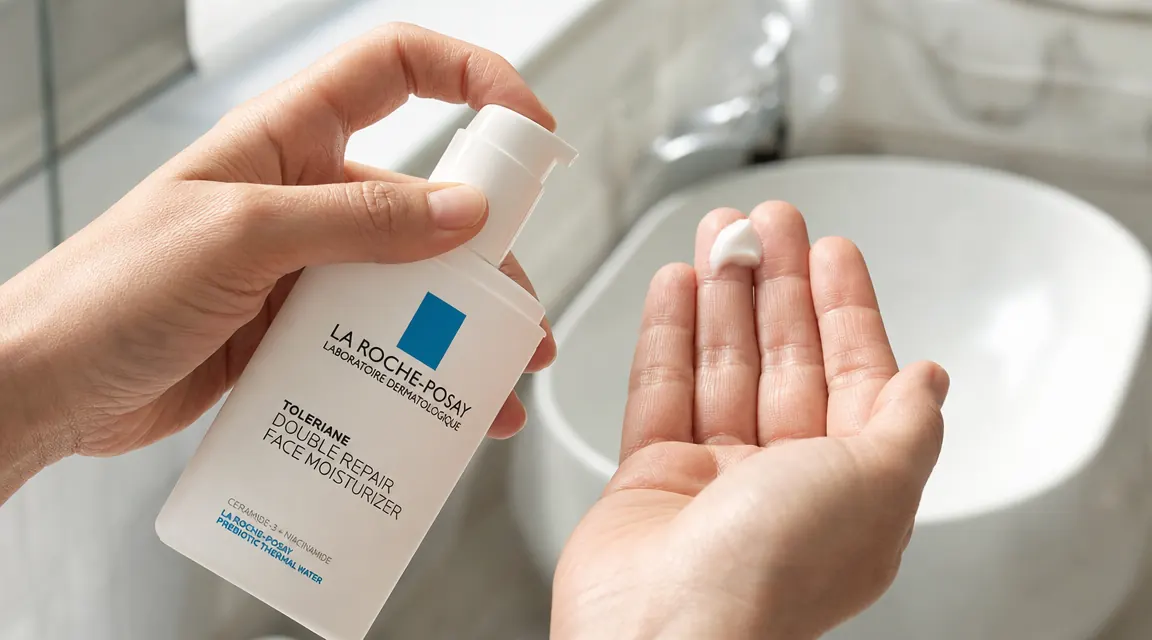
La Roche-Posay Toleriane Double Repair contains three ceramides (ceramide NP, ceramide AP, ceramide EOP), niacinamide at a concentration the brand reports as 2%, glycerin, and La Roche-Posay's signature prebiotic thermal spring water as the base. It is oil-free and fragrance-free. The emulsifier system uses relatively inert ingredients, which is a meaningful choice for reactive skin because emulsifiers in cheaper moisturizers are a common contact irritant.
The ceramide combination matters. Healthy skin has a specific ratio of ceramides, cholesterol, and fatty acids in the stratum corneum. When you strip your barrier with over-exfoliation or harsh products, that lipid matrix degrades. Replenishing with topical ceramides is not a cure, but there is solid peer-reviewed evidence that it meaningfully accelerates barrier recovery and reduces transepidermal water loss (TEWL). The Toleriane formula includes all three major ceramide fractions, which puts it ahead of single-ceramide products on the mechanism level.
Niacinamide at 2% is relatively modest compared to the 10% concentrations you see in dedicated niacinamide serums, but in the context of a damaged barrier, you do not want to start high. Niacinamide at low concentrations supports barrier function, reduces redness, and mildly regulates sebum without causing the flushing that some people experience at higher doses. It is a supporting player here, not the main event.
The Six-Month Timeline
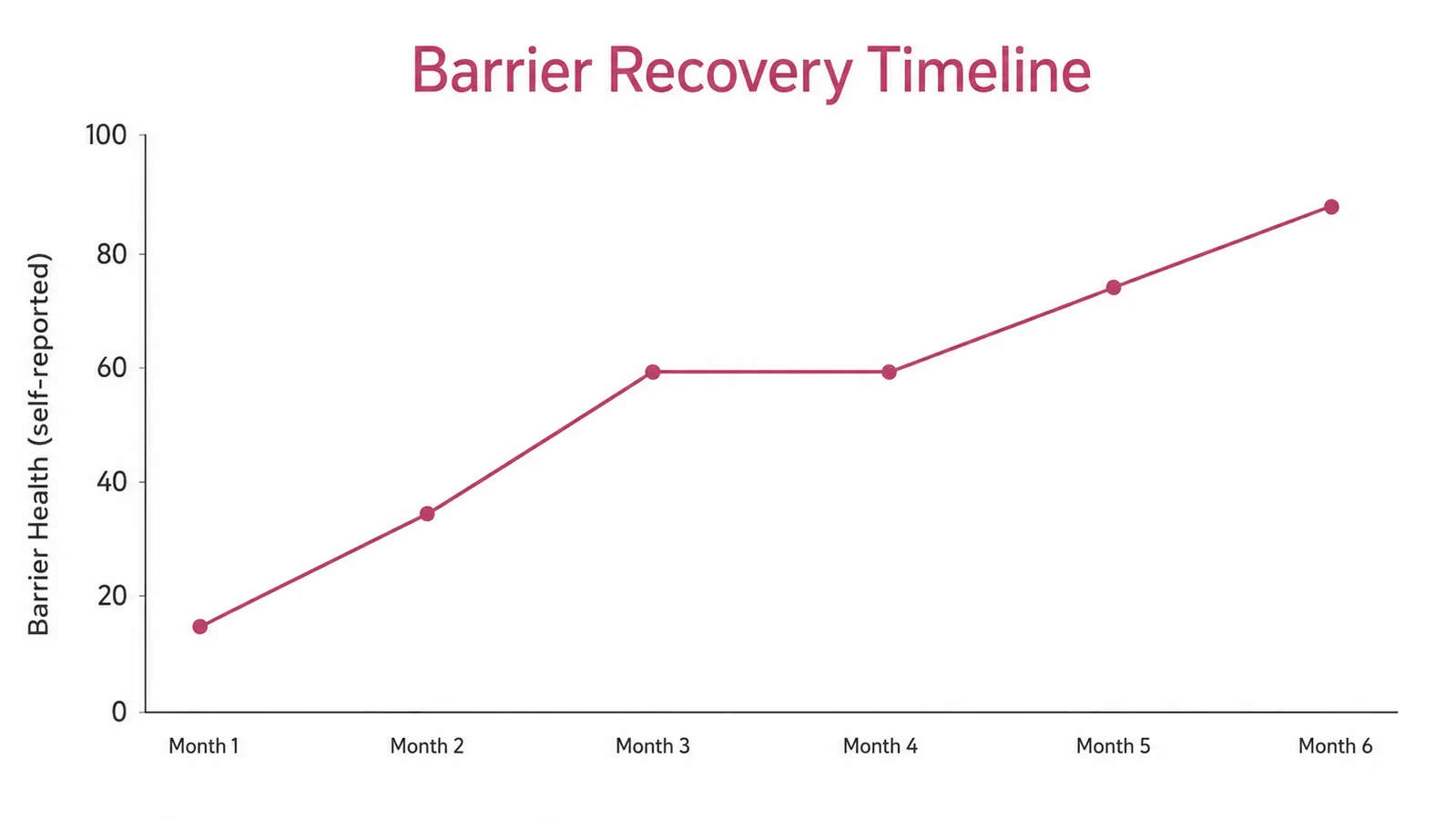
Weeks one and two: the burning stopped. That was it. The flaking continued but the reactive stinging when water touched my face was gone by day ten. I credit the combination of glycerin and the thermal water base, both of which have demonstrated skin-calming properties without requiring an intact barrier to work. This was meaningful because every other product I had tried in this window, including a 'sensitive skin' moisturizer from a pharmacy brand, had maintained the burning sensation.
Month one to two: flaking reduced significantly. The tight, papery texture on my cheeks started to normalize. Breakouts slowed from three or four active spots per week to roughly one. I noticed I could press my fingertip to my cheek and not wince. The redness was still present but less blotchy, more even.
Month three: this is where the ceramide story becomes visible. My skin started to look like it had some structure again. Not 'glowing' in the influencer-caption sense, but just normal. Even. Like a face that was not constantly inflamed. The two breakouts I had been fighting for eight weeks finally cleared and stayed clear. I attribute that to the barrier being functional enough to complete the wound-healing cycle, not to any anti-acne ingredient in the formula.
By month three my skin just looked like a face that was not constantly inflamed. That sounds like a low bar. After two months of burning and flaking, it felt like a lot.
Months four through six: marginal improvements. The dramatic recovery happened in the first three months. After that, I was maintaining a repaired barrier rather than actively rebuilding one. I slowly reintroduced a vitamin C serum in month five with no reaction, which I took as confirmation that the barrier was genuinely functional again. By month six I could use a mild AHA once a week without any stinging, which would have been unthinkable in February.
Texture, Absorption, and Daily Wearability
Toleriane Double Repair has a thin, lotion-like texture that absorbs in about thirty seconds on clean damp skin. It does not leave a greasy film. Under mineral SPF it disappears entirely and does not pill. Under a tinted SPF or light coverage base it performs well. For my combo skin, which gets oily on the T-zone by midday, it did not add any additional shine or congestion in the pores.
The pump dispenses a consistent amount, which I appreciated. Two pumps cover my full face and neck comfortably. One annoyance: the pump does not lock for travel, so it requires removing or taping if you are packing it in a bag. Minor complaint, but worth knowing.
In summer months it was appropriate as a standalone moisturizer. In the two weeks of cooler weather I experienced toward the end of my test period, I found myself wanting more. My forehead and cheeks felt comfortable but not adequately occlusive for temperature below about 60F. People in colder climates or with genuinely dry skin may need to layer something heavier over the top in winter.
How It Compares to What I Tried Before
In the week before my dermatologist visit I had tried three other moisturizers attempting to calm my barrier on my own. One was a 'sensitive skin' formula that contained phenoxyethanol high on the ingredients list, which is a known irritant for sensitized skin. One was a popular 'barrier cream' with a genuinely good ceramide profile but also a fragrance compound that sent my cheeks red within an hour. The third was a plain petroleum jelly, which stopped the burning but made me break out within three days.
Toleriane Double Repair threads a needle that is harder to find than its price suggests. It is genuinely fragrance-free rather than 'unscented' (which can still contain masking fragrances). It avoids common irritants in the emulsifier layer. And it delivers ceramides alongside the thermal water base in a formula stable enough that the actives are not degraded by the time you open the bottle. For more detail on how it stacks up against CeraVe Moisturizing Cream specifically, see the full La Roche-Posay Toleriane vs CeraVe comparison.
What I Liked
- Three ceramide fractions that match what a healthy stratum corneum actually needs
- Genuinely fragrance-free, not just unscented. Verified by ingredient label.
- Niacinamide at a level appropriate for reactive or sensitized skin
- Absorbs fast and wears invisibly under SPF and light makeup
- Thermal spring water base with prebiotic technology reduces sting on damaged skin
- Oil-free, suitable for combo and oily skin types without congestion
- Nearly 50,000 Amazon reviews at 4.6 stars is real-world signal
Where It Falls Short
- Too light for genuinely dry or very dry skin, especially in winter
- Niacinamide concentration too low to address existing hyperpigmentation or enlarged pores on its own
- Pump does not lock for travel
- No fatty acids in the formula, which means it addresses ceramides but not the full lipid trio your barrier needs for optimal repair
- Price per ounce is higher than CeraVe Moisturizing Cream, which has a partially overlapping formula

The One Ingredient This Formula Is Missing
I want to be specific about a real limitation. Optimal barrier repair requires three lipid types in roughly a 1:1:1 ratio: ceramides, cholesterol, and fatty acids (specifically linoleic acid). Toleriane Double Repair includes ceramides and some cholesterol-adjacent lipids but does not include a meaningful concentration of fatty acids. This means it addresses a significant piece of barrier recovery but not the complete picture. If your barrier is severely compromised, you may get better results pairing it with a few drops of a linoleic-acid-rich oil like rosehip or squalane underneath, then applying the Toleriane on top.
I did not do this during my test, on purpose. I wanted to assess the moisturizer alone. But if I were starting over with a more severe barrier disruption, I would add a plain rosehip oil to the protocol. For most people with mild-to-moderate barrier issues, the formula as-is is more than sufficient. For those rebuilding after more serious damage (post-laser, post-chemical peel, severe eczema), you may need to supplement. For the full ceramide protocol, see how to rebuild a damaged skin barrier with ceramides.
Who This Is For
Toleriane Double Repair is designed for skin that has been disrupted rather than skin that is simply dry. The ideal user is someone who has over-exfoliated, had a reaction to a new active, gone through a procedure like a chemical peel or laser, or is dealing with a sensitized-skin flare. It is also genuinely well-suited as a baseline moisturizer for people with rosacea or eczema who need a fragrance-free, low-irritant formula they can trust year-round. Combo-to-oily skin types benefit from the oil-free formula. Breakout-prone skin is safe here. The niacinamide will provide mild help with inflammation without making things worse.
Who Should Skip It
If your skin is dry rather than reactive, this formula is likely too light to be your primary moisturizer. You will absorb it in thirty seconds and feel like you applied nothing within an hour. Dry skin in a cold climate or dry environment needs occlusives and heavier emollients, not just ceramides and glycerin. CeraVe Moisturizing Cream or a petrolatum-based product will serve you better. Similarly, if you are looking for a moisturizer that doubles as a treatment for dark spots, fine lines, or congestion, this is not it. The ingredient profile is optimized for calm and repair, not for active improvement. You need to have a functioning barrier first, then layer treatments on top of it.
If you are rebuilding after actives damage, start here before you start anywhere else.
Toleriane Double Repair is the moisturizer that dermatologists actually hand patients after they strip their barrier. Fragrance-free, ceramide-forward, and genuinely gentle. Check today's price on Amazon, where it has nearly 50,000 reviews at 4.6 stars.
Amazon Check Today's Price on Amazon →