

I spent most of my late twenties confused about why my vitamin C serum wasn't doing anything for the dark spots left behind by breakouts. I was using it. I was consistent. The spots were not fading. It took me an embarrassingly long time to figure out that consistency alone isn't the variable. How you apply it, when you apply it, and what you put on before and after it matters more than the ingredient alone.
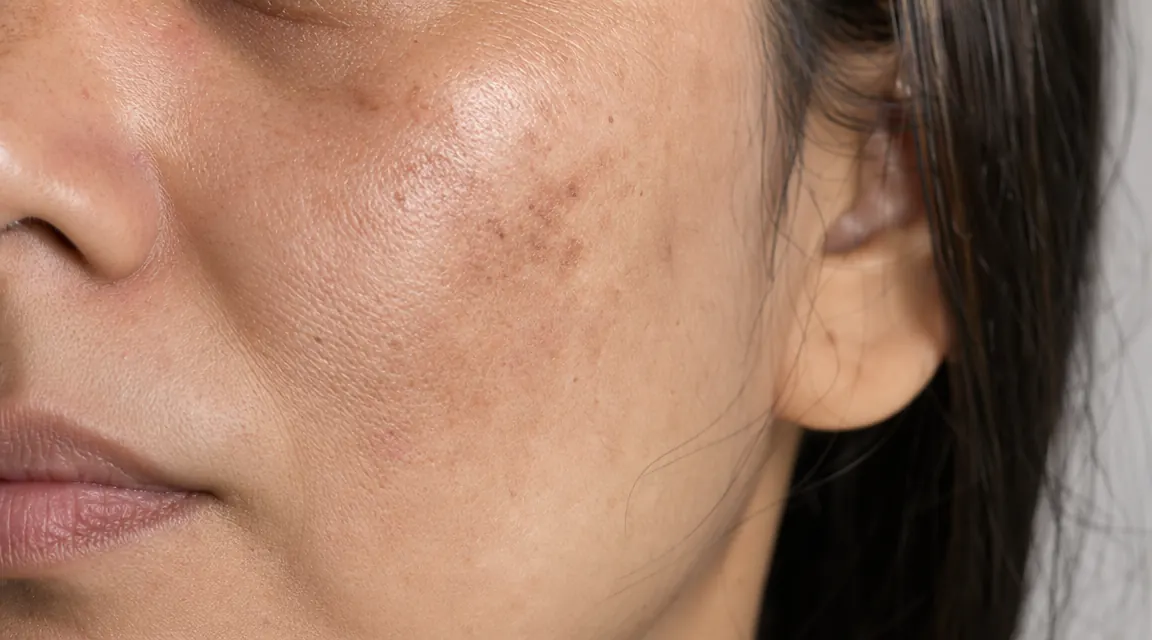
Post-inflammatory hyperpigmentation, the flat, brownish or reddish marks that stick around after a breakout clears, is one of the most common complaints from people with breakout-prone skin. Sun-induced dark spots behave differently at the cellular level, but they respond to the same protocol. Vitamin C works on both because it interrupts the tyrosinase enzyme that drives melanin overproduction. The catch: it has to be stable, appropriately concentrated, and applied in a way that actually lets it absorb. The TruSkin Vitamin C Serum (ASIN B01EKUBU5Y) is the formula I've been using for over four months on my own combo skin, and this guide reflects what actually worked.
Still using vitamin C serum on skin that isn't fully clean? That's the first thing to fix.
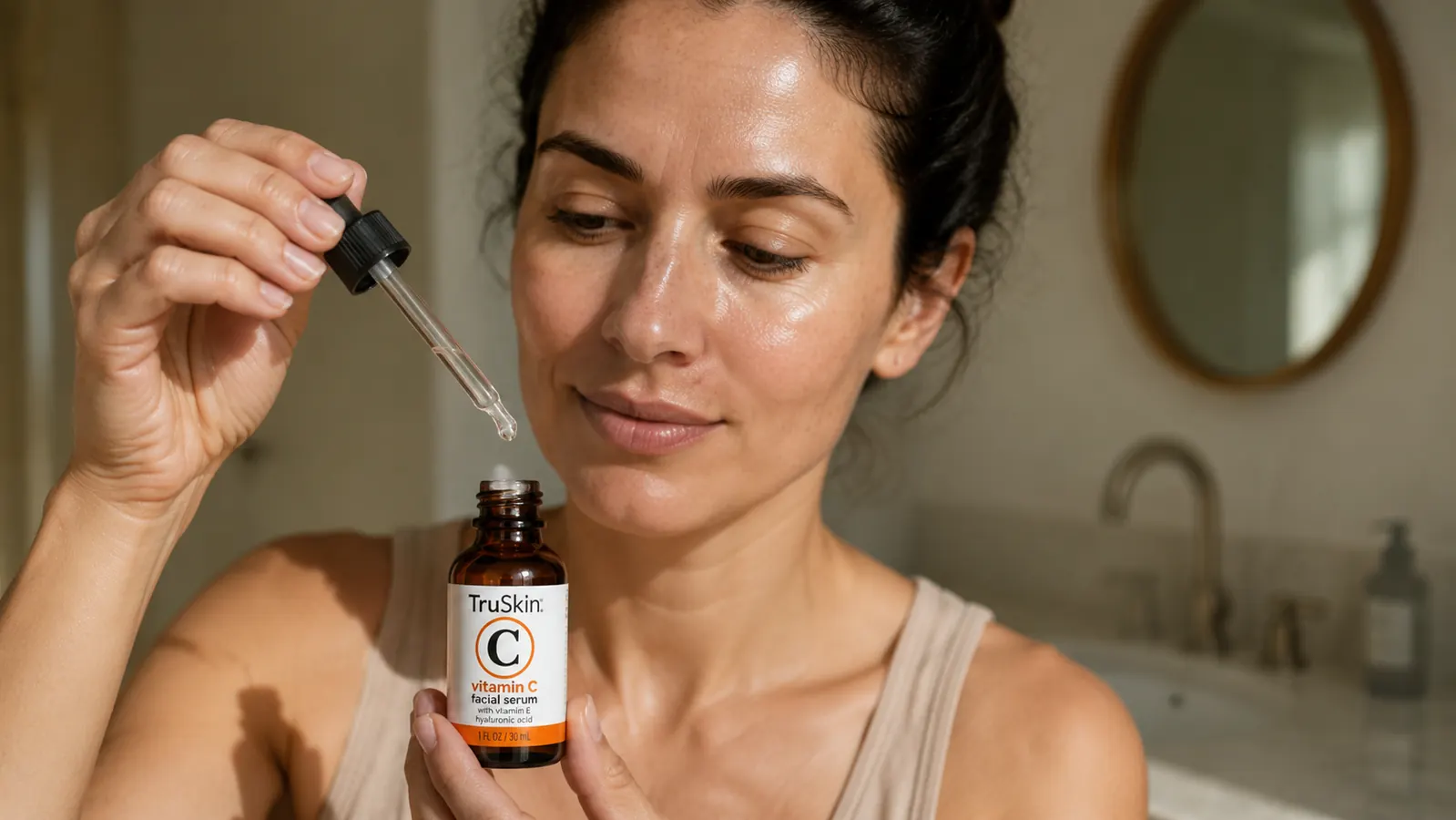
TruSkin Vitamin C Serum layers cleanly over bare skin and under moisturizer, the exact application order this guide covers. Rated 4.4 stars across more than 155,000 Amazon reviews.
Amazon Check Today's Price on Amazon →Step 1: Start with a Properly Cleansed Face, Not Just Rinsed
Vitamin C serum is not forgiving of residue. Sunscreen, makeup remnants, or even leftover moisturizer from the night before will sit on top of your skin and act as a physical barrier between the serum and your epidermis. That golden liquid you paid for ends up absorbing into last night's skincare instead of your actual skin.
In the morning, a gentle low-pH cleanser is enough. You don't want to strip your barrier before layering actives. Gel or cream cleansers that come in around pH 5 to 5.5 are ideal, they cleanse without disrupting the acid mantle that helps vitamin C penetrate efficiently. Rinse, pat dry, and wait two full minutes before the next step. Applying serum to damp skin dilutes it and affects absorption.
If you double-cleanse at night and don't wear heavy product to sleep, a single gentle rinse in the morning is fine. The point is starting with a clean, dry surface, not squeaky tight or stripped.
Step 2: Apply the Serum on Bare Skin, Not Over Toner or Essence
This is where most people get the order wrong. Vitamin C is a small-molecule active that needs direct contact with the skin's surface to absorb into the epidermis. Putting it over a toner or hydrating essence, even a watery one, adds a layer of water-based product between the serum and your skin. That slows absorption and reduces how much vitamin C actually reaches the cells responsible for melanin production.
With TruSkin's formula, I dispense three drops into my palm, press my palms together once to warm it slightly, then press it into my skin starting at the cheeks and working outward. I don't rub or drag. Gentle pressing gives the serum time to settle into the skin rather than sitting on the surface.
Wait 60 to 90 seconds before moving to the next step. You want the product to feel dry to the touch but not tight. If it feels tacky after two minutes, you may have applied too much, four drops is usually the max needed for full-face coverage.
Vitamin C works on dark spots by interrupting the enzyme that overproduces melanin. But it has to reach the skin first. Layering order isn't optional.
Step 3: Lock It In with a Ceramide or Barrier-Supporting Moisturizer
Once the serum has fully absorbed, follow immediately with your moisturizer. This step is not optional, even if you have oily skin. Vitamin C can oxidize faster in dry conditions, and your skin's barrier function affects how well the ingredient is retained at the surface level over time. A moisturizer creates the environment where the serum can keep working throughout the morning.
For combo or breakout-prone skin, look for something with ceramides, hyaluronic acid, or panthenol, all of which support barrier repair without adding comedogenic oils that trigger breakouts. Heavy cream moisturizers can sit on top of the serum and trap it against the surface, which sounds ideal but can actually cause milia over time in pore-prone skin types. A lightweight lotion or gel-cream is the better call.
This step matters especially if you're also dealing with post-breakout hyperpigmentation. Inflamed, barrier-compromised skin makes dark spots worse and fade slower. Keeping the barrier healthy accelerates the timeline.
Step 4: Follow with SPF 30 or Higher, Every Single Morning
If you skip SPF, you're undoing the vitamin C. This is not a mild suggestion. UV exposure directly triggers the melanin overproduction that creates dark spots in the first place, and it deepens the existing ones you're trying to fade. Using vitamin C without SPF is like trying to drain a bathtub with the tap still running.
Vitamin C does have some photoprotective properties, it quenches free radicals generated by UV exposure. But it is not a sunscreen and doesn't replace one. The combination of vitamin C and SPF is genuinely synergistic: the serum provides antioxidant protection while the sunscreen blocks the UV rays that would otherwise generate those free radicals. Together they work better than either alone.
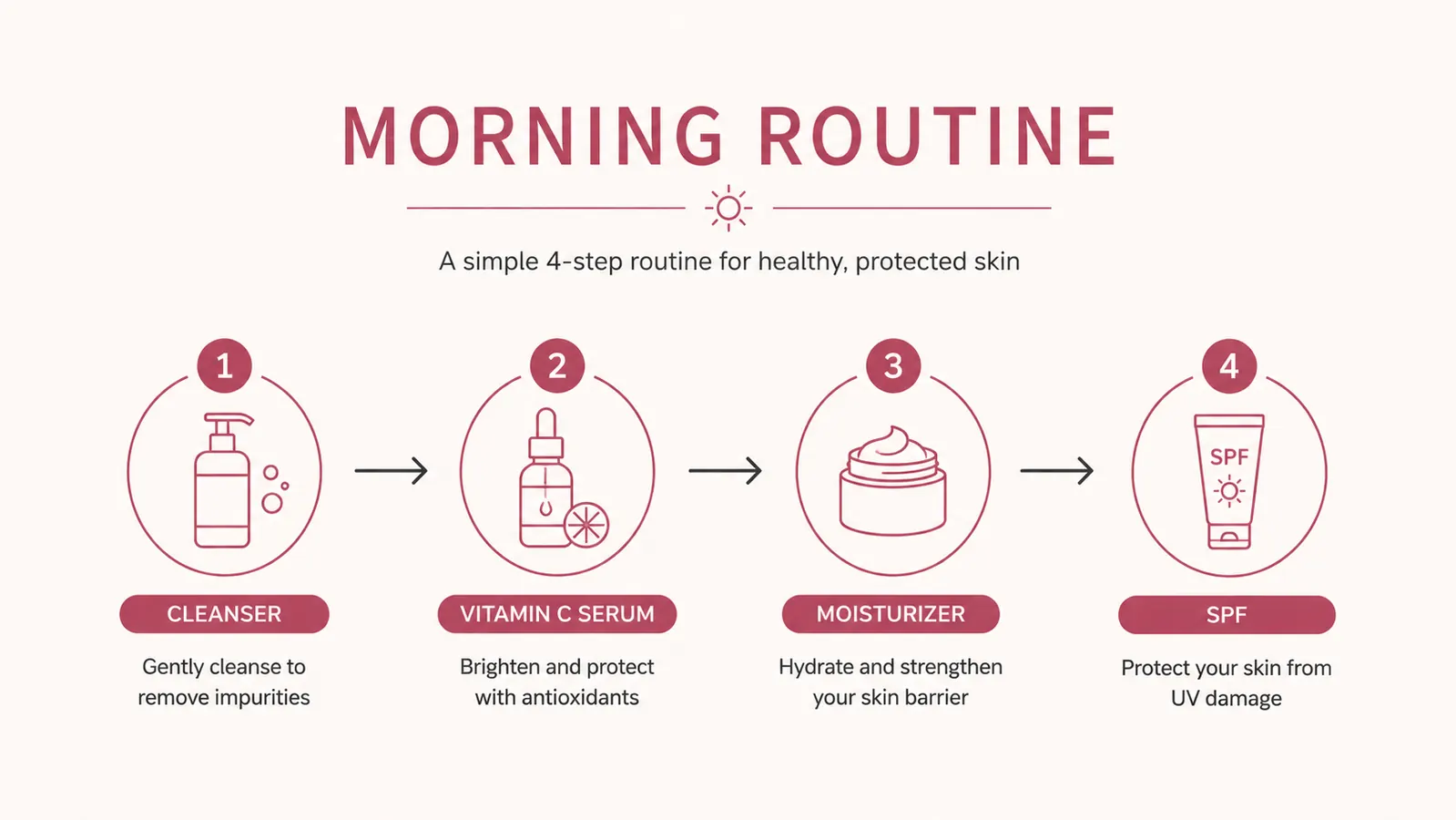
The full morning sequence is: cleanser, wait two minutes, vitamin C serum on bare skin, wait 60 to 90 seconds, moisturizer, then SPF after the moisturizer has settled. Do not layer SPF directly over a wet or tacky serum. The order of that last pairing matters for both cosmetic finish and UV protection efficacy.
Step 5: Set Realistic Expectations and Track the Timeline
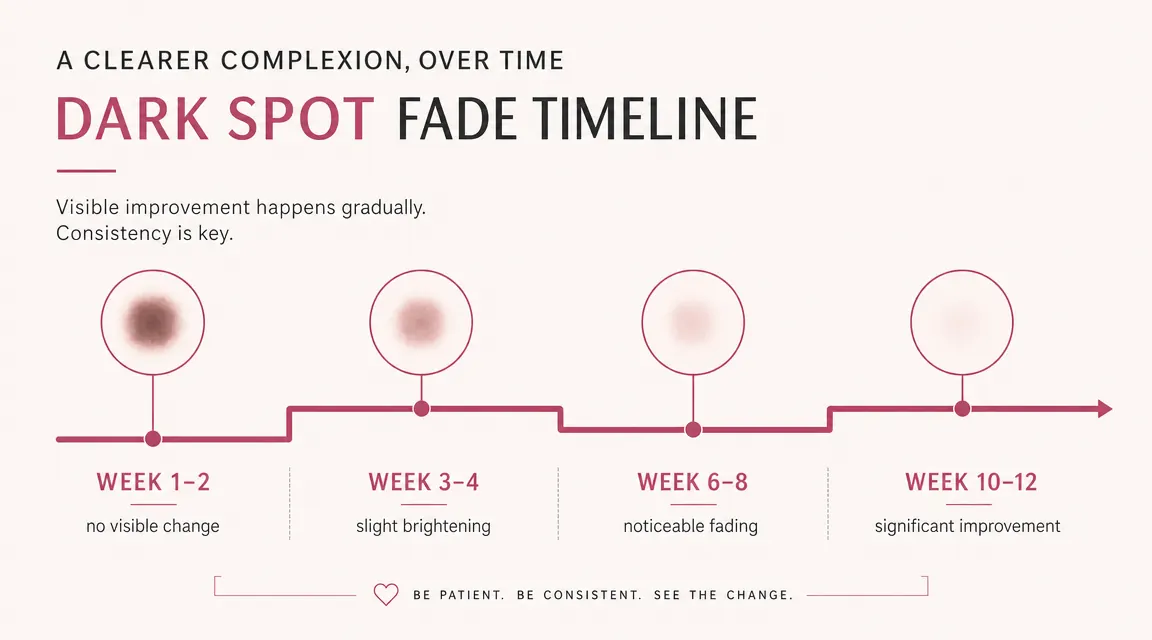
The honest timeline for vitamin C and dark spots is eight to twelve weeks of consistent daily use before you should expect to see meaningful change. Not noticeable in the mirror the first morning. Not faded by week two. This is not a failure of the product, it's how melanin regulation works biologically. The cells responsible for the discoloration don't turn over overnight.
What you may notice sooner is an overall shift in skin radiance and tone evenness. Most people report that skin looks brighter and more 'awake' within the first three to four weeks even if the dark spots themselves aren't visibly fading yet. That's the antioxidant effect at work, less oxidative dullness, better light reflection from the surface.
The spots themselves, particularly post-inflammatory hyperpigmentation from breakouts, respond faster if you are rigorous about SPF and avoid picking at active breakouts before they heal. Sun exposure without protection can set back progress by weeks. I track mine by taking a single consistent photo in the same light every Sunday morning. After eight weeks with TruSkin, the three PIH marks along my jaw from a cluster of December breakouts had visibly lightened. Not gone, but lighter. By week twelve, they were close enough to my base skin tone that they'd stopped reading as distinct spots in natural light. See my longer write-up in the TruSkin Vitamin C Serum four-month review for the full timeline with photos.
What Else Helps (and What to Avoid)
A few things will accelerate the protocol, and a few will stall it. On the helpful side: niacinamide layered in the evening routine (not morning, as it can compete with vitamin C for absorption) is one of the most well-researched complements to vitamin C for hyperpigmentation. Azelaic acid at night also targets tyrosinase and works well without irritating most skin types. Both can be added to a PM routine once you've confirmed the morning vitamin C is stable and your skin isn't reacting.
What to avoid: do not use vitamin C and niacinamide in the same application step. The concern about niacin flushing when the two are mixed is overstated, but they do compete for skin absorption when layered back-to-back, and keeping them in separate routines (vitamin C in the AM, niacinamide in the PM) tends to produce better results. Also avoid pairing vitamin C with benzoyl peroxide in the same routine, BP oxidizes vitamin C and renders it inactive. If you use BP for breakouts, move it to the evening.
For a deeper comparison of TruSkin against a higher-price point competitor with a more complex formulation, the TruSkin vs SkinCeuticals C E Ferulic breakdown covers the exact trade-offs.
You've got the protocol. Now you need a formula that actually stays stable long enough to work.
TruSkin Vitamin C Serum combines 20% vitamin C with vitamin E and hyaluronic acid in a formula designed for daily use on all skin types. Over 155,000 Amazon reviews at 4.4 stars. Worth checking the current price before you buy anything else.
Amazon Check Today's Price on Amazon →