

If you've been washing your face twice a day, skipping heavy moisturizers, and still looking like an oil slick by noon, the problem probably isn't what you're putting on your skin. It's what you're not putting on it. Oily skin in adults, especially combo skin that's oily in the T-zone and somehow also dry everywhere else, is almost always a sebum regulation issue. Your skin is producing more oil than it needs, often as a stress response to barrier disruption. Niacinamide is the ingredient that addresses this directly. Not by drying you out, but by actually signaling to your sebaceous glands to produce less.
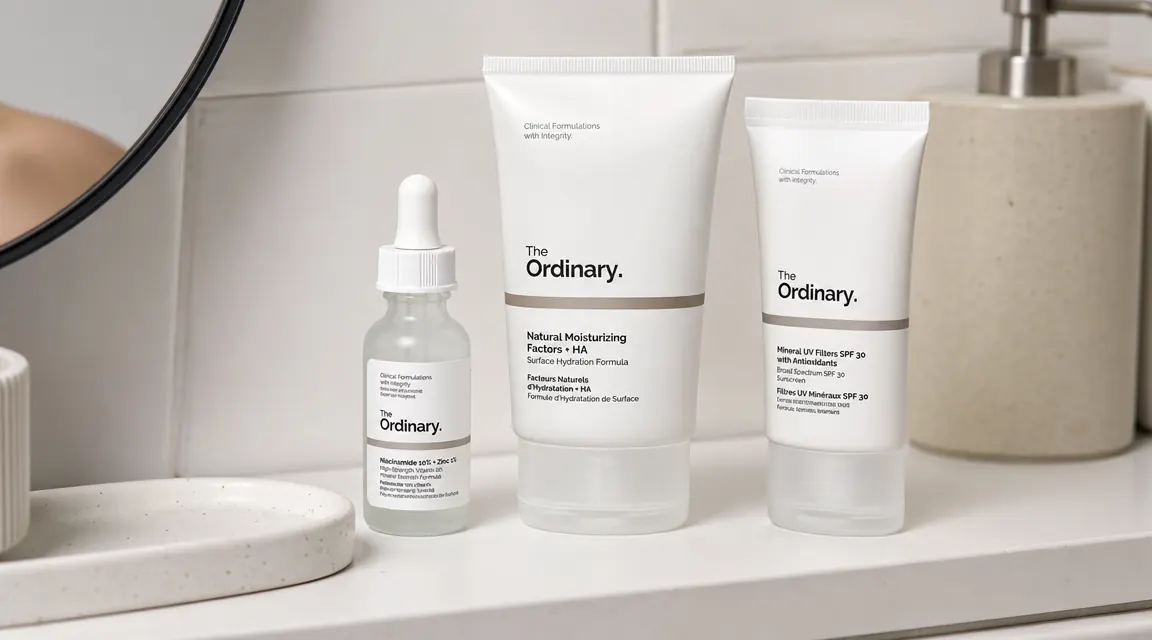
I spent years trying to fight oiliness with mattifying products and every foaming cleanser that promised to 'purify' my pores. What I was actually doing was stripping my barrier, which made my skin panic-produce more oil to compensate. The fix wasn't more stripping. It was The Ordinary Niacinamide 10% + Zinc 1%, used consistently, layered correctly, and given enough time to actually work. This guide covers exactly how to do that.
If your skin is oily by 10am no matter what you do, start here.
The Ordinary Niacinamide 10% + Zinc 1% is the most evidence-backed entry point for sebum regulation at this price point. 4.7 stars from over 56,000 Amazon reviews. Check today's price before the size you want sells out.
Amazon Check Today's Price on Amazon →Step 1: Understand Why Your Skin Is Actually Oily
Before you apply anything, it helps to understand what's driving the oiliness. The skin has sebaceous glands that produce sebum, a waxy mix of lipids that keeps the skin barrier intact. When those glands are overactive, you get excess oil at the surface. What makes them overactive? Genetics play a role, but so does barrier damage, hormonal fluctuation, and ironically, using harsh cleansers or skipping moisturizer. When the skin detects dryness or irritation, it compensates by producing more oil.
Niacinamide, the form of vitamin B3 used in skincare, works partly by down-regulating the activity of sebaceous glands. Clinical studies have shown that 2% to 4% niacinamide reduces sebum excretion rate after consistent use. The Ordinary's formula uses 10%, which is higher than the studied doses but well within the range used in cosmetic formulations. The zinc adds a secondary mechanism: it has mild astringent properties and helps reduce the inflammatory response around pores that makes them look larger. Together, they address the oil problem from two directions.
What niacinamide does not do: it won't strip oil off your face. It won't mattify you instantly. It works at the cellular signaling level, and that takes time, typically four to eight weeks of consistent use before you see a real difference in midday shine. If you go in expecting an immediate mattifying effect, you'll quit too early.
Step 2: Build the Right Cleanser Foundation
The cleanser you use before your niacinamide serum matters more than most people realize. If you're using a high-pH foaming cleanser or anything that leaves your skin feeling tight after washing, you're starting from a place of mild barrier disruption. That triggers the oil compensation cycle before your serum even gets a chance to work.
For oily or combo skin using niacinamide, look for a cleanser that's pH-balanced (around 5.5), removes excess sebum without squeaking, and leaves skin feeling clean but not stripped. Gel cleansers without sulfates tend to hit this target well. You want to start with skin that's calm and balanced, not skin that's already in panic mode from a 9% glycolic acid wash.
One practical note: if you're currently using a harsh cleanser and your skin is extra oily as a result, switching to a gentler cleanser alone will often reduce oiliness within one to two weeks. Add niacinamide after that shift, not simultaneously, so you can actually see what's doing the work.
Step 3: Apply Niacinamide in the Correct Layering Order
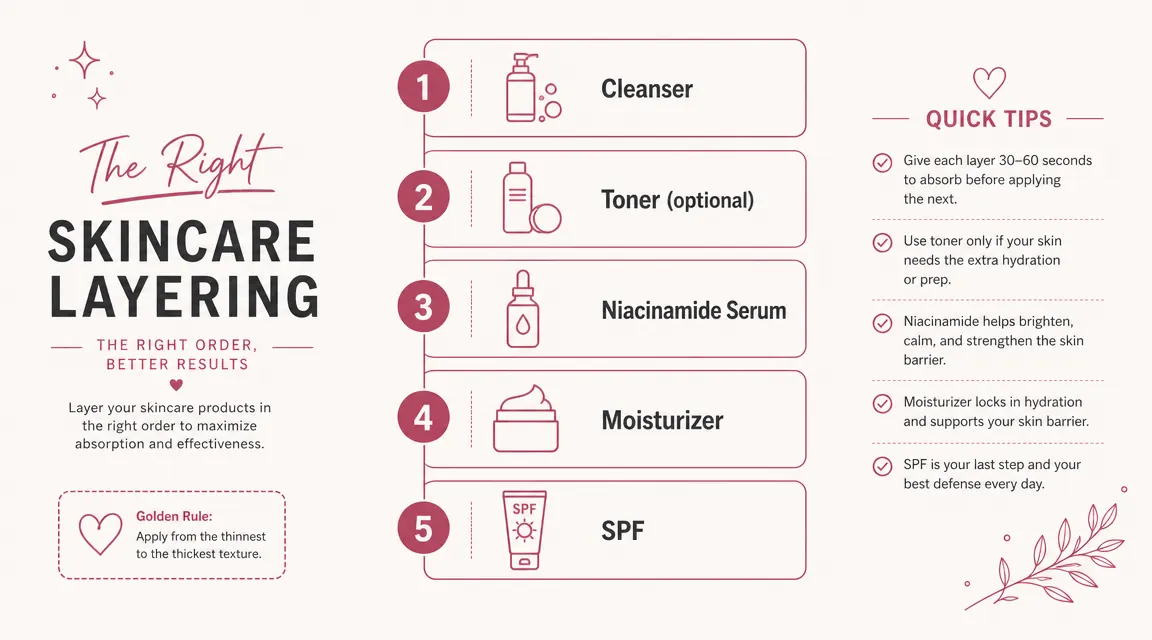
The Ordinary Niacinamide 10% + Zinc 1% is a water-based serum with a lightweight, slightly viscous texture. It goes on after cleansing (and toning if you use a toner), and before heavier treatments, moisturizer, and SPF. The rule for layering skincare is thinnest to thickest, or water-based to oil-based. Niacinamide is water-based, so it sits early in the routine.
The correct morning order: gentle cleanser, optional water-based toner, 3 to 4 drops of niacinamide serum patted into skin, wait 30 seconds for absorption, moisturizer, SPF. The evening order is the same minus the SPF. If you're also using a retinol or exfoliant, niacinamide can be used on alternating nights, or applied before retinol since it actually helps buffer some of the irritation that retinoids can cause.
The one layering conflict worth knowing: older formulations of vitamin C (specifically L-ascorbic acid) can interact with niacinamide and form a yellowing compound called niacin. This is mostly a cosmetic issue, not a safety issue, and it only occurs with certain vitamin C formulations. If you use a vitamin C serum, apply it at a different time of day than niacinamide, or use a stabilized vitamin C form like ascorbyl glucoside, which doesn't have this reaction.
Niacinamide doesn't dry your skin out. It teaches your skin to stop over-producing oil in the first place. That's a fundamentally different mechanism from everything in your 'oil control' drawer.

Step 4: Don't Skip Moisturizer Because You're Oily
This is the step that breaks most oily-skin routines. People with oily skin skip moisturizer because they don't want to add more grease. But moisturizer doesn't add oil to your skin. It adds water-binding humectants and occlusive agents that tell your skin the barrier is intact and it doesn't need to produce extra sebum. Skipping moisturizer when you're oily is like turning off the fire alarm and wondering why the building keeps burning.
For oily or combo skin, you want a lightweight, gel-based moisturizer or a light fluid moisturizer with humectants like glycerin or hyaluronic acid. Not a thick cream, not a balm. Something that absorbs quickly and doesn't leave a residue. Apply it while your skin is still slightly damp from the niacinamide serum for better absorption. A pea-sized amount is usually enough for the whole face.
This step is non-negotiable if you want the niacinamide to actually work. You're trying to create a stable barrier environment. Dry, disrupted skin won't respond to sebum regulation the way intact skin will.
Step 5: Set Realistic Expectations and Track Progress
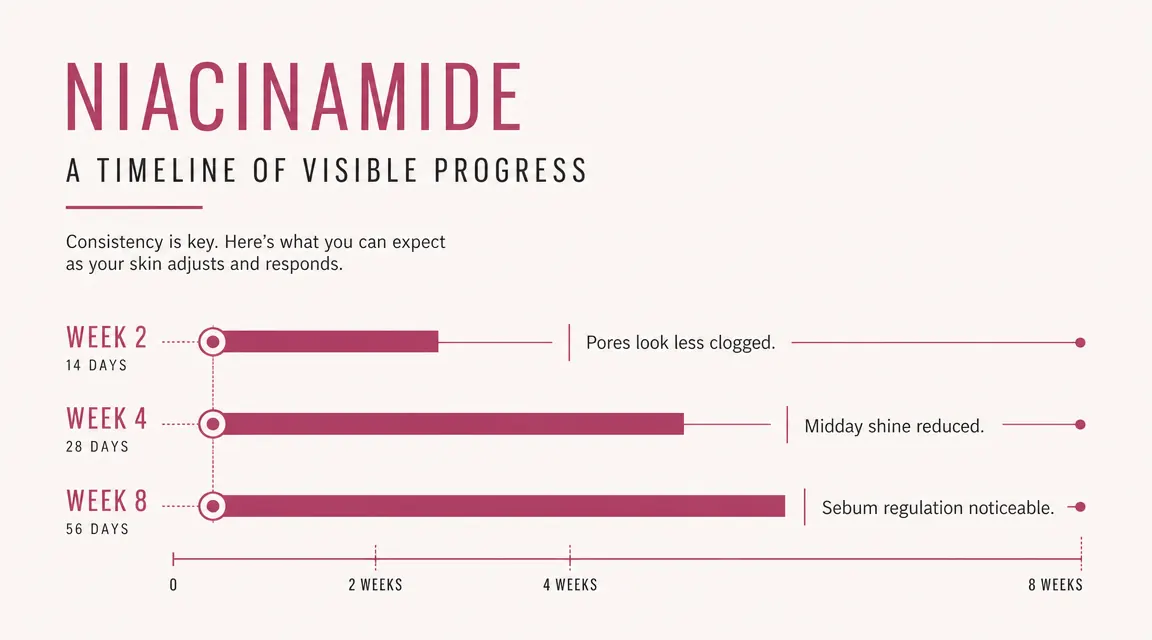
Week one and two: you will likely see no change in oil production. This is normal. Niacinamide is not a topical blotter. It's changing how your skin behaves at the cellular level, and that takes time. What you might notice early is some reduction in post-breakout redness and fading of any dark marks, since niacinamide also inhibits melanin transfer. That's a sign it's working, just not on the oil side yet.
Weeks three and four: most people start noticing their skin stays less shiny through the morning. Midday touch-ups become less frequent. Pores may look slightly smaller, especially around the nose. This is the zinc and niacinamide working together on pore visibility and sebum volume.
Weeks six through eight: this is where the real difference shows. Not a dramatic before-and-after transformation, but a genuine shift in baseline oiliness. Skin that used to look greasy by 11am might stay matte until 2pm. Breakouts related to clogged pores from excess oil may reduce in frequency. This is the kind of subtle but real progress that makes niacinamide worth sticking with.
Keep a simple log. Take a photo of your skin in the same lighting at the same time of day every two weeks. It's easy to forget what your skin looked like before when you're looking at it every morning. The photos give you an actual before-and-after to compare, and they keep you honest about whether the protocol is working or just feels like it is.
What Else Helps with Oily Skin
Niacinamide is not a solo act. A few other elements make a meaningful difference in oil control alongside it. SPF is the one most people skip, and it's probably the most important: UV damage degrades the skin barrier, which triggers sebum overproduction. A lightweight, non-comedogenic SPF worn daily removes one major driver of barrier disruption. If every sunscreen you've tried has broken you out, look at mineral-only formulas with zinc oxide, which is itself a mild sebum regulator.
A low-concentration BHA exfoliant used two to three times per week helps clear the sebum out of pores so they look smaller and get clogged less often. BHA is oil-soluble, meaning it can actually penetrate into the pore lining and dissolve the sebum and dead skin cell buildup. Niacinamide regulates how much oil is produced. BHA deals with the oil that is produced. They work on different parts of the same problem. If you want to understand how they compare and when to use each, the comparison piece linked below goes into it in detail.
Diet and sleep affect sebum production too, though the skincare industry undersells this because there's no product to sell. High-glycemic diets and dairy have documented associations with increased sebum production in acne-prone skin. Sleep deprivation elevates cortisol, which increases sebum production. These aren't things a serum can override. If you're using niacinamide correctly and still not seeing results after eight weeks, it's worth looking at whether the oil is being driven by something outside the bottle.
The Product That Anchors This Protocol
The Ordinary Niacinamide 10% + Zinc 1% is the serum I'd start with for anyone new to niacinamide. The formula is simple: water, niacinamide, zinc PCA, a few stabilizers. No fragrance. No unnecessary actives competing for attention. It's a one-ingredient-category serum that does what it says it does, and at its current price point, you can afford to use it consistently for several months without the financial pressure of abandoning it before it has a chance to work.
The 4.7 rating across over 56,000 Amazon reviews is meaningful for a serum with this many consistent users. Fake reviews cluster differently than real usage patterns, and a product with this review volume and this rating has genuinely delivered results for a lot of oily, breakout-prone skin types. That doesn't mean it works for everyone, but the failure rate is low enough that it's a reasonable first step before spending more on higher-concentration niacinamide serums from prestige brands.
One honest caveat: some people with very sensitive skin experience a slight tingling or redness from 10% niacinamide in the first week or two. If that happens, try applying it over a thin layer of moisturizer as a buffer rather than directly onto clean skin. If the irritation persists after two weeks, a 5% concentration may be a better starting point for your skin. The Ordinary also makes a lower-strength version. The goal is consistent use, not heroically tolerating something that's bothering you.
Ready to stop fighting your skin and start regulating it?
The Ordinary Niacinamide 10% + Zinc 1% is the foundation of this protocol. It is one of the most purchased skincare serums on Amazon for a reason. See today's price and check the current stock before your size sells out.
Amazon Check Today's Price on Amazon →