
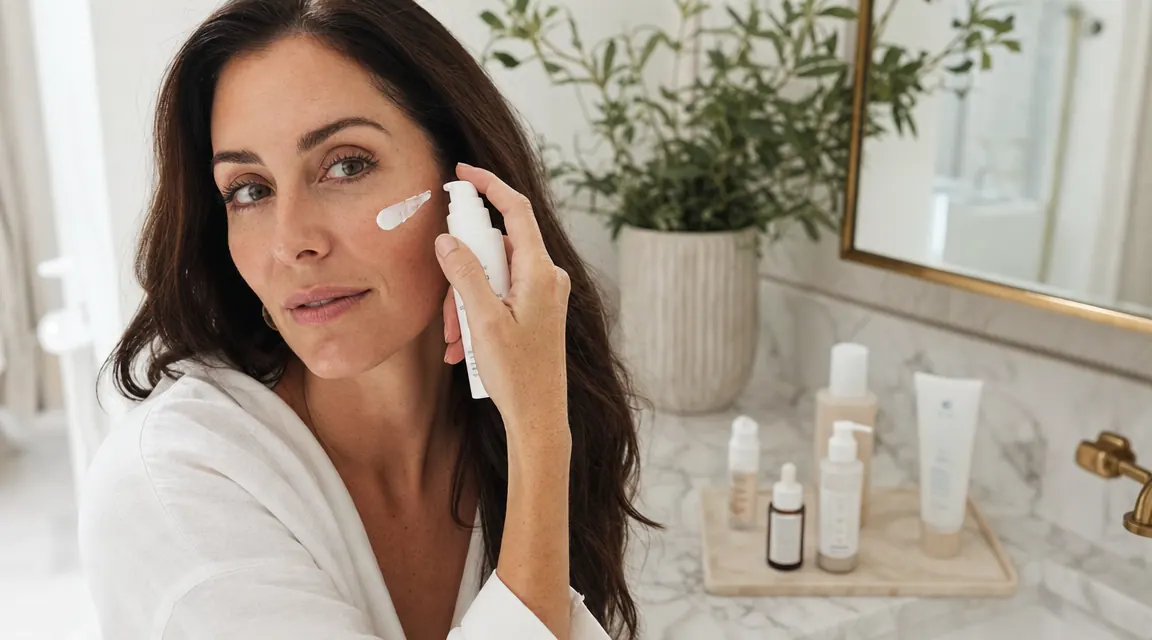
I skipped sunscreen for most of my twenties. Not because I didn't know better, but because every SPF I tried either clogged my pores, stung my eyes, or left me looking like I'd been glazed with shortening. I'd try one for a week, break out, and quietly put it back in the drawer. By 32, I had the hyperpigmentation and early sun damage to prove it.
The problem wasn't sunscreen. The problem was that I kept reaching for chemical filters when my skin couldn't tolerate them. Once I switched to a mineral sunscreen built around zinc oxide, everything changed. The habit finally stuck. If you're in the same place I was, this guide walks you through the exact five-step process I used to build a daily SPF habit that has held for over two years.
If breakout-prone skin has kept you from wearing SPF daily, this zinc oxide formula was made for exactly that.
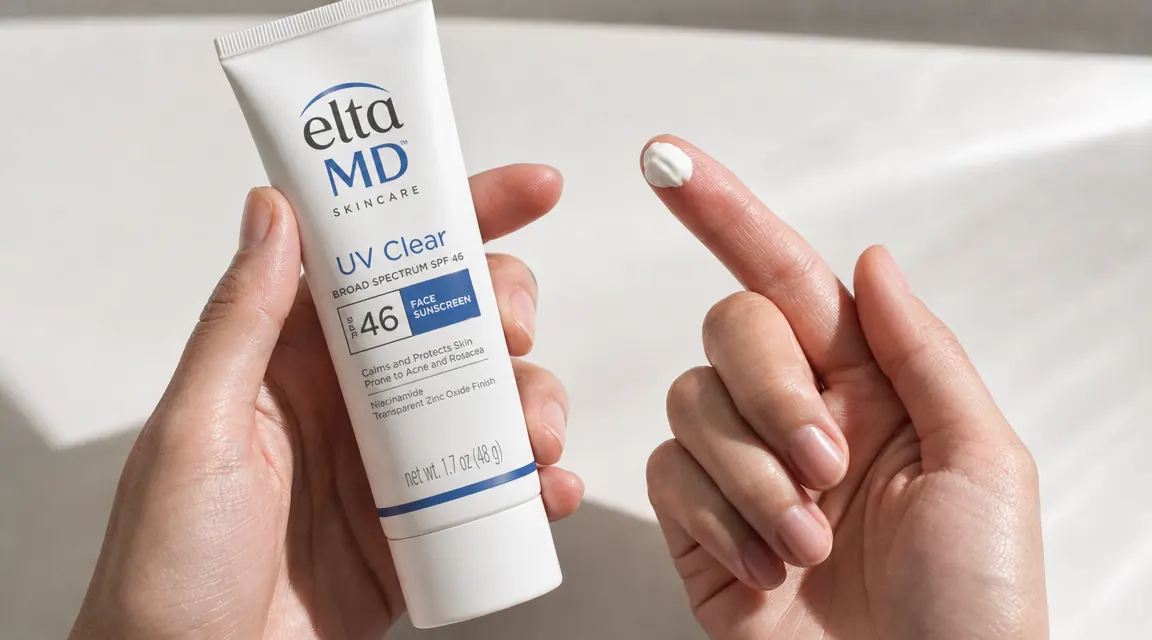
EltaMD UV Clear SPF 46 uses 9% zinc oxide as its only active filter, plus niacinamide to calm inflammation. It's the mineral sunscreen I use every single morning and the one I recommend to anyone whose skin reacts to chemical filters.
Amazon Check Today's Price on Amazon →Step 1: Identify Why Your Last SPF Attempt Failed
Most people blame sunscreen in general when the real culprit is a specific filter type or a formulation issue. Before you build a new habit, you need to understand what broke the old one. The two most common failure points are: chemical filter reactions (burning, stinging, breakouts) and texture problems (white cast, greasiness, pilling under makeup).
Chemical filters like avobenzone, oxybenzone, and octisalate work by absorbing UV rays and converting them to heat energy. For people with reactive or rosacea-prone skin, that heat conversion can trigger flushing, stinging, or closed comedones around the forehead and jawline. If that sounds familiar, no amount of habit-building will help until you switch the formula entirely.
Mineral sunscreen uses zinc oxide and sometimes titanium dioxide to physically deflect UV rays rather than absorb them. There's no heat conversion, no penetration below the skin surface, and no sensitizing reaction in people with compromised barriers. If your previous SPF failures involved any stinging or breakouts, mineral is where you should start.
Step 2: Choose a Mineral Sunscreen That Fits Your Skin Type
Not all mineral sunscreens are created equal. The earliest zinc oxide formulas were heavy, chalky, and left a white cast that no amount of blending eliminated. That reputation still haunts the category, even though modern formulations have largely solved the texture problem. What you want to look for is micronized zinc oxide at or above 9%, a non-comedogenic base, and ideally a formula that includes an added active like niacinamide or hyaluronic acid.
For acne-prone and combo skin specifically, I'd point you toward EltaMD UV Clear SPF 46. It uses 9% micronized zinc oxide as the sole active, meaning no chemical filter hybrid that could trigger sensitivity. The base is oil-free and includes niacinamide, which actively calms the kind of low-grade inflammation that makes breakout-prone skin more reactive. At 47,585 Amazon reviews and a 4.6-star average, the real-world feedback backs up the formula.
If you have very dry skin, look for a mineral sunscreen that layers a hydrating humectant like glycerin or sodium hyaluronate under the zinc. EltaMD UV Clear contains hyaluronic acid, which helps prevent the tight, dry feeling that some zinc formulas can leave. If your skin is oily, the oil-free base here is critical. Avoid sunscreens with cyclopentasiloxane or dimethicone in a heavy concentration, as those can trap sebum in pores.
Step 3: Lock in the Application Order So It Becomes Automatic
Habit failure is almost always a sequencing problem, not a motivation problem. When sunscreen feels like an extra step you're squeezing in at the end, it's easy to skip when you're running late. When it's the last step in a fixed sequence you do automatically, the habit runs on autopilot.
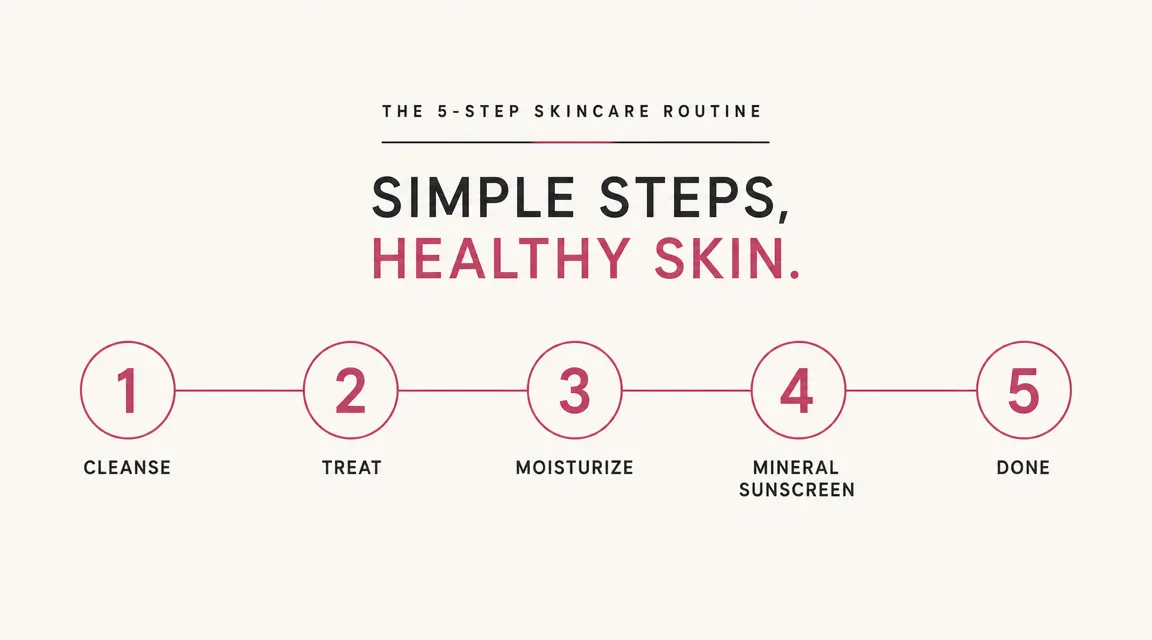
The correct order for a morning routine using actives is: cleanser, antioxidant serum or treatment, moisturizer if needed, then mineral sunscreen as the final step. Sunscreen goes last because it needs to sit on top of your skin to form an effective barrier. Applying moisturizer over it dilutes the filter and reduces SPF efficacy. Apply sunscreen after everything else has absorbed, about two minutes after your moisturizer, then let it set for two to three minutes before applying any makeup.
The specific trigger I used to lock in this sequence: I put my EltaMD UV Clear bottle directly in front of everything else on my bathroom counter. I moved it from the medicine cabinet to the counter, where I couldn't miss it. Small environmental cues like that do more for habit formation than any amount of willpower. If you have to open a drawer or move something to access your sunscreen, you've already created friction that will cause skipping.
Habit failure is almost always a sequencing problem, not a motivation problem. Make mineral sunscreen the last thing on your counter, in your hand, before you leave the bathroom.
Step 4: Get the Amount Right Every Single Time
Under-application is the most common mistake in sunscreen use and the one most people don't realize they're making. SPF ratings are calculated based on a specific application density: 2 milligrams per square centimeter of skin. For the face alone, that works out to about a quarter teaspoon, or roughly the size of a nickel pooled in your palm.
Most people apply about a third of that amount. When you consistently under-apply SPF 46, you're functionally wearing something closer to SPF 15. That's still better than nothing, but it won't give you the protection you think you're getting. For EltaMD UV Clear specifically, two full pumps from the dispenser gets most people to the right coverage for face and neck. If you're using a tube instead of a pump, a pea-sized amount is not enough. A nickel-sized amount is your target.
One technique that helped me get consistent with dosing: apply in sections instead of all at once. Pump product into your palm, dot it across your forehead, nose, cheeks, and chin, then blend outward. Sectioning ensures even coverage and makes it obvious when you've applied too little, because the dots don't connect.
Step 5: Solve the Reapplication Problem Before It Becomes a Habit-Breaker
Dermatologists recommend reapplying sunscreen every two hours of direct sun exposure. This is technically correct and practically ignored by almost everyone. If your job keeps you outdoors most of the day, reapplication with a full liquid SPF over makeup is genuinely difficult. If you're mostly indoors with incidental sun exposure through windows, a single morning application of mineral sunscreen gives you meaningful protection throughout the workday.
For indoor-heavy days, the morning application of EltaMD UV Clear is sufficient for the vast majority of people. UV light does penetrate glass (particularly UVA), so morning application before sitting near windows is still worthwhile. For weekend days with extended outdoor time, carry a mineral powder SPF for touch-ups over makeup. Several brands make loose mineral powder sunscreens in small brush applicators that go in a purse without adding bulk.
What you want to avoid is letting reapplication complexity become the reason you skip morning application entirely. A single daily application of a broad-spectrum mineral SPF 46 is dramatically better than skipping entirely because the reapplication protocol feels unsustainable. Start with consistent morning application, then layer in midday reapplication when that baseline habit is solid.
What Else Helps: Supporting the Habit from Every Angle
Beyond the five steps above, a few other factors help the SPF habit survive real life. First, keep a backup bottle at work or in your bag. The days I've skipped sunscreen are almost always the days I was in a rush and my bottle was at home. A small tube of travel-size EltaMD UV Clear in a desk drawer removes that excuse entirely.
Second, track your skin tone over time. The positive feedback loop is slow, but it's real. After six to twelve months of consistent daily SPF use, hyperpigmentation from previous breakouts fades faster, new spots appear less frequently, and the overall tone becomes more even. Photographing your skin in the same light every two months makes this progress visible and reinforces the habit. For a deeper look at how EltaMD UV Clear performs over a full year of daily use, my year-long review covers what actually changed month by month.
Third, pair the SPF habit with a product you already love using. If you look forward to your vitamin C serum every morning, put the sunscreen right next to it. The anticipation of the enjoyable product pulls you through the full sequence. If you're deciding between EltaMD and a chemical SPF alternative like Supergoop Unseen, the comparison between the two formulas is worth reading before you commit to a bottle.
Finally, remove the performance pressure. You don't need a perfect application every day to benefit from daily SPF. Two pumps, blended in 30 seconds, is far more valuable than the elaborate reapplication routine you'll execute twice and then abandon. Done consistently at 80% is better than perfect twice a week.

Two years of daily SPF with zero sunscreen-related breakouts. This is the formula that made the habit stick.
EltaMD UV Clear SPF 46 is formulated specifically for acne-prone and sensitive skin, with 9% micronized zinc oxide, niacinamide, and hyaluronic acid. Oil-free, fragrance-free, and dermatologist recommended. Check today's price and availability on Amazon.
Amazon Check Today's Price on Amazon →